

Warning Signs: Seeking Alternatives During Self-Exclusion
People search for sites outside a self-exclusion system for different reasons. Some are simply trying to understand a term. Others are bored, stressed, in debt, chasing losses, or feeling an urge that has become hard to manage. If you are in the second group, the search itself may be the warning sign. It means the barrier you set is being tested at the exact moment it was meant to help.
Self-exclusion is not a punishment. It is a protective choice made to create distance from gambling accounts. GAMSTOP is a free tool that allows UK residents to exclude themselves from licensed gambling websites and apps. The system is designed around a minimum exclusion period, and that minimum period cannot be removed once it has started. That feature is not a flaw. It is the point of the boundary.
It can be uncomfortable when a boundary holds during a strong urge. The discomfort does not mean the boundary is wrong. It may mean the support around the boundary needs to be stronger: payment blocks, blocking software, fewer triggers, a trusted person, and help from a support service. The aim is to make the next safe action easier than the risky action.
GAMSTOP as one layer, not the whole answer
GAMSTOP applies to online gambling companies that participate through the Great Britain licensing framework. It is an important layer, but it does not solve every access point in life. It does not replace bank controls, device-level blocking, support conversations, budgeting help, or treatment where someone needs it. Thinking in layers is more realistic than expecting one tool to carry everything.
The expiry point also deserves care. GAMSTOP says it will not contact users when the minimum exclusion period expires. If the user does not ask to remove the exclusion, it remains in place for seven further years after the minimum period. That means the end of the minimum period is not an automatic invitation to gamble again. It is a moment to review what has changed, whether the risk is still present, and whether keeping the barrier is the safer choice.
If you are tempted to remove a barrier as soon as possible, pause and ask a harder question: what would need to be true for gambling to be safe for you again? If the honest answer is unclear, or if gambling has affected debt, relationships, work, sleep or mood, keeping protection in place is usually the more cautious route.
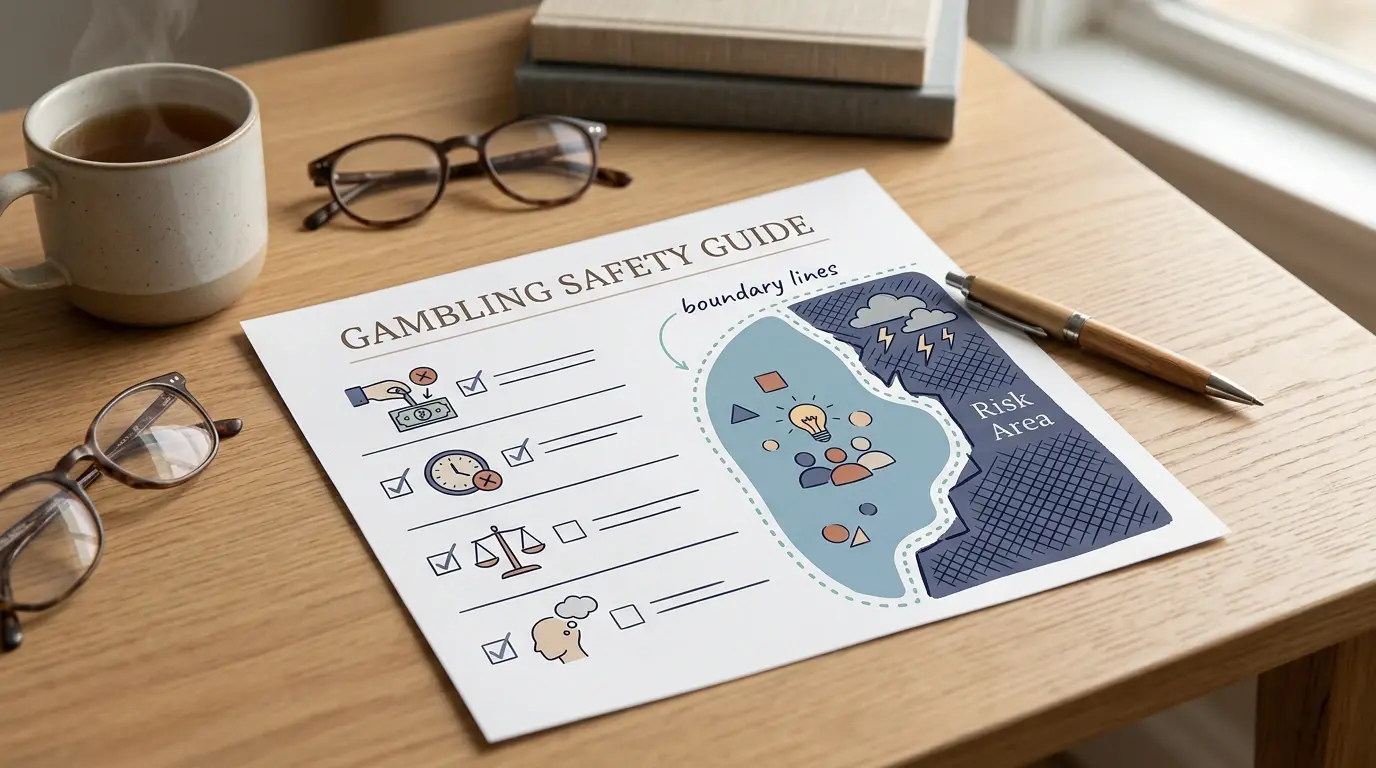
Protection layers that can work together
| Layer | What it helps with | What it cannot do alone |
|---|---|---|
| Self-exclusion | Creates account-level distance from licensed online gambling websites and apps covered by the scheme. | It does not remove every trigger, payment route or urge. |
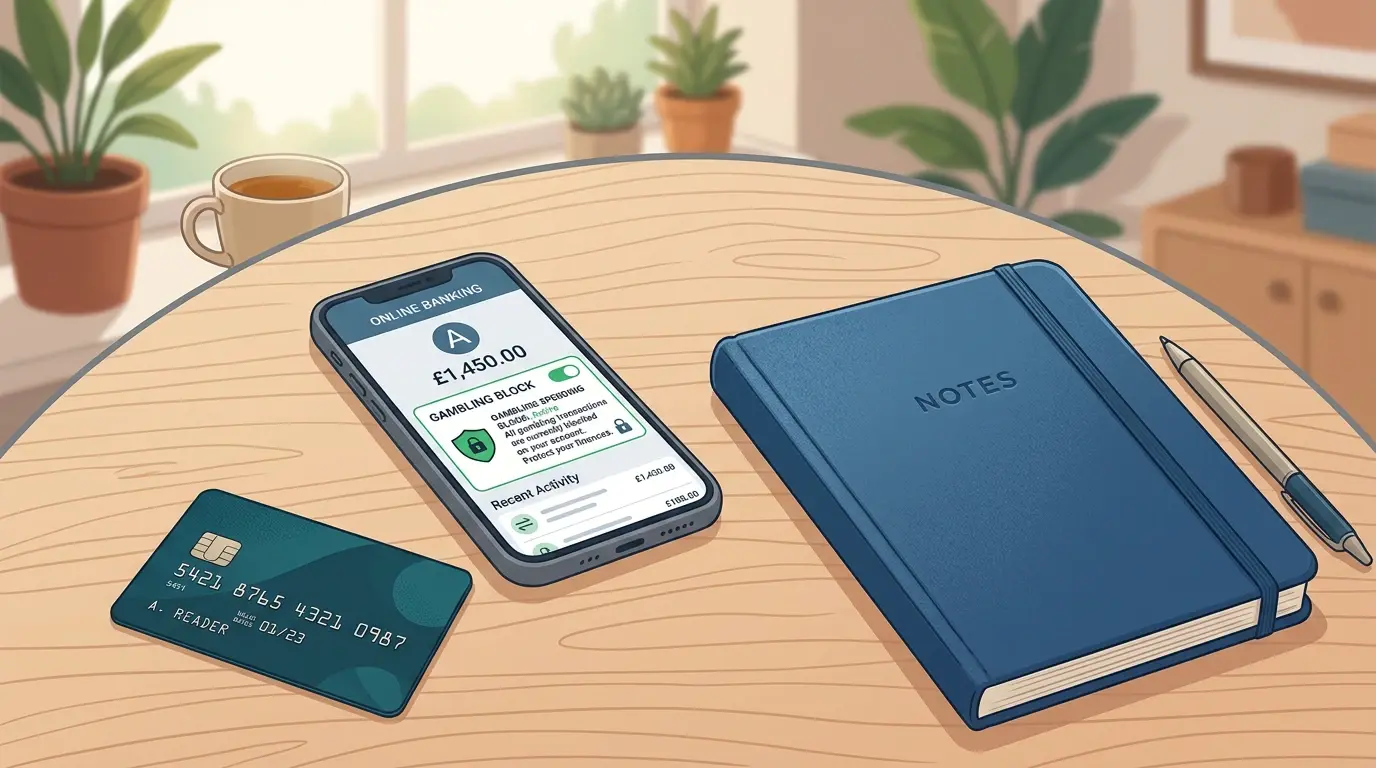
| Bank gambling blocks | Adds a money boundary by blocking or limiting gambling payments where the bank supports the tool. | It may not cover every account, card or situation, and it should not be treated as something to outsmart. |
| Blocking software | Makes gambling sites harder to access from a device and can reduce impulsive browsing. | It works best when combined with other barriers and support. |
| Trusted-person support | Gives you someone to contact before acting on an urge, especially when the urge feels urgent. | It cannot help if you hide the situation or only speak after money is lost. |
| Professional or charity support | Offers structured help when gambling is affecting control, money or wellbeing. | It still needs a decision to engage honestly and early. |
Alongside professional help, implementing strict gambling payment blocks and bank controls can significantly reduce impulsive deposits.
A practical sequence for a difficult moment
- Move away from the payment or sign-up screen. Even a few minutes matters when the urge is strongest.
- Do not search for another site, wallet or route. That keeps the gambling loop active.
- Check whether self-exclusion, bank blocks or blocking software are still in place. Treat them as help, not as obstacles.
- Use one outside action: message a trusted person, leave the room, go somewhere public, or contact a support service.
- Remove immediate fuel where possible: close tabs, put the card out of reach, and avoid alcohol or late-night decisions if those make gambling harder to control.
- Write down what triggered the urge. Debt pressure, boredom, stress and chasing losses need different kinds of help.
This sequence is deliberately simple. In a calm moment, it can look obvious. In a difficult moment, obvious steps are easier to follow than a complicated plan.
What not to do with protective tools
Do not treat a protective tool as a challenge. A page that encourages you to gamble during self-exclusion, bypass a bank block, or weaken blocking software is not helping you. It is asking you to act against a boundary that was probably set for a reason. If the urge is strong enough that you want to remove every barrier, that is a reason to add support, not a reason to reduce it.
- Do not open new accounts because an old account is blocked.
- Do not ask someone else to make payments for you.
- Do not move money through extra steps to disguise a gambling payment.
- Do not remove a device block in the middle of an urge.
- Do not chase losses because a previous barrier slowed you down.
These points are not about blame. They are about making the next hour safer. A person can be determined to stop and still have moments when gambling feels urgent. The purpose of tools is to protect the person in those moments.
How to strengthen the boundary without making life smaller
A good protection plan does not only say “no gambling.” It also makes ordinary life easier to manage. If evenings are the risky time, plan something specific for evenings. If payday is the risky moment, move bill money early and use bank controls before the urge starts. If phone use in bed leads to gambling searches, keep the phone out of the bedroom or use blocking software. If debt pressure is the trigger, seek help with the money problem rather than trying to solve it through gambling.
It can also help to make the boundary visible. Write down why you set self-exclusion, what gambling was costing you, and what you want the boundary to protect. Keep that note where you usually gamble. When an urge appears, you do not need to debate the whole future. You only need to protect the next decision.
Where this page connects with the rest of the guide
This page is about support and control. It does not evaluate gambling sites, compare offers or explain payment workarounds. For the meaning of the phrase itself, read what “not on GAMSTOP” means in practice. For payment restrictions and bank tools, read payment blocks and safer money boundaries. If a dispute, withdrawal delay or account issue is making you want to keep gambling to recover money, use the page on complaints and account accountability before taking any further risk.
If you are trying to gamble during a self-exclusion period, the safest next step is to pause and use support. You do not need to solve everything today. You do need to avoid making the next decision while the urge is in control.
You can find a complete overview of player protection strategies on the main page of our responsible gambling guide.