
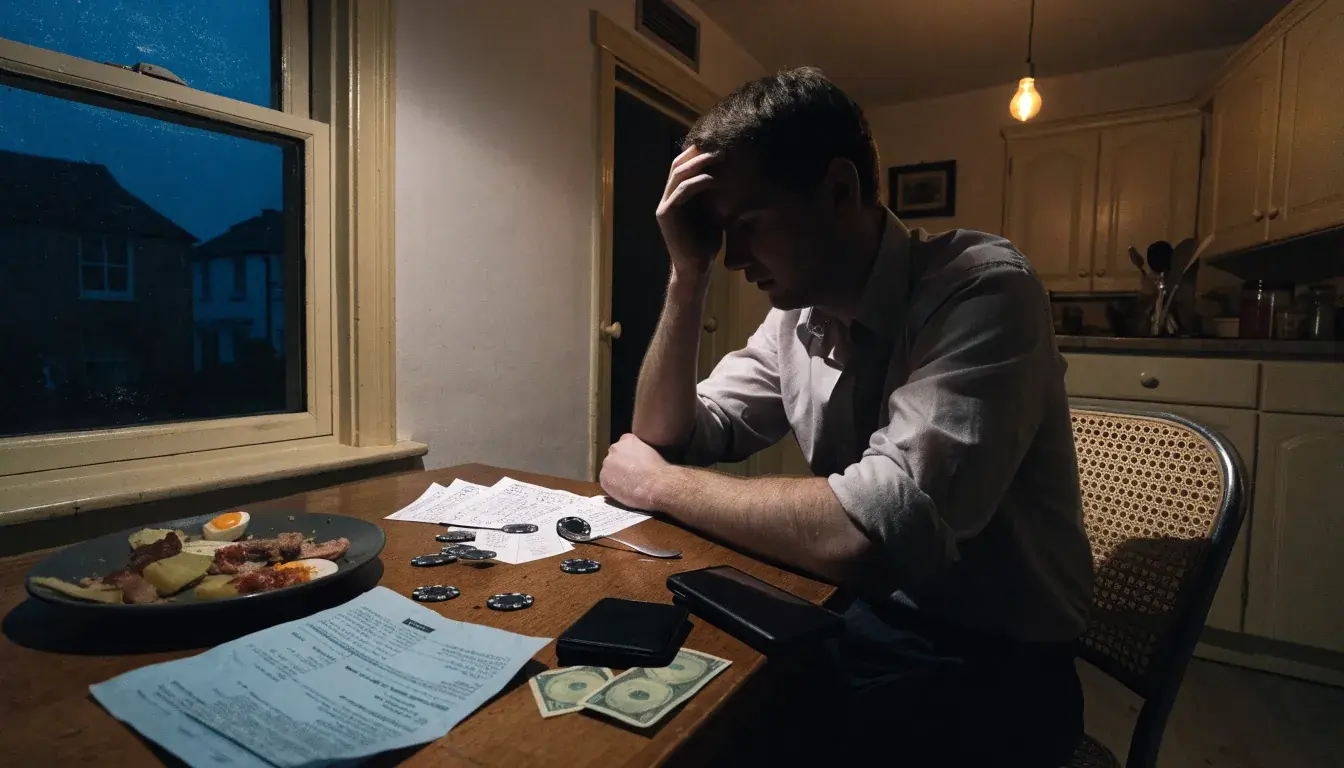
Gambling is not a way to earn money, and it will not solve money problems. I’ve lost money trying to get back what I’d already lost. That usually meant losing more.
Signs to take seriously
Look at what you’re doing, not just how you feel. Gambling may be becoming a problem if you:
- spend more time or money gambling than you planned;
- keep raising your stakes or chasing losses;
- use money meant for bills, food or other essentials;
- borrow money, sell things or hide spending to keep gambling;
- lie to people close to you about how much you gamble;
- feel restless or irritable when you try to stop;
- neglect work, sleep or relationships because of gambling;
- keep playing despite the harm it is causing.
One sign is enough to pause and act. You don’t have to wait until things get worse.
Recommended online casinos
- x3betBonus: Welcome Pack 100% Up to £1.000 + 200 Free Spins · Payout speed: 1-3 business days
- NightLuckBonus: Welcome Pack + 805% Up To 6400€ + 280 FS · Payout speed: 1-3 business days
- JetsetspinsBonus: 200% Bonus + 100 Free Spins + Free Royal Wheel · Payout speed: 1-3 business days
- ChanzeBonus: Slots Welcome Bonus #1 200% up to €500 · Payout speed: 1-3 business days
- NightWinBonus: £900 + 400 free spins · Payout speed: 1-3 business days
- AmunbetBonus: Join now and get 450% up to 2,700 GBP + 450 FS · Payout speed: 1-3 business days
- ZombillionBonus: Welcome Pack 250% up to £4000 + 200 FS · Payout speed: 1-3 business days
- WinBeastBonus: €5000 + 500 FS + €650 Freebet · Payout speed: 1-3 business days
- BeOnBetBonus: 100% up to €500 + 100 FS · Payout speed: 1-3 business days
- SlotoSportBonus: 500% up to £ 10 200+ 777 FS · Payout speed: 1-3 business days
What you can do now
If you’re logged in, stop playing and use the account controls to set a limit or exclude yourself. UK-licensed casinos must provide responsible gambling tools, including self-exclusion. Remote operators must offer accessible account-level limit controls, and new customers must be prompted to set a financial limit before their first deposit. Look in your account settings or responsible gambling section.
If you cannot find the controls, contact the operator through the support route shown on its site and ask how to apply a limit or self-exclusion. You can also ask the operator to explain its complaints process if you have a problem with how your account or request has been handled. UKGC licensees must offer an internal complaints process and access to an approved Alternative Dispute Resolution service.
For help right now, tell someone you trust what has been happening and ask them to stay with you while you take the next step. If gambling is affecting your finances or mental health, speak to a healthcare professional and say plainly that gambling is involved. I can’t give you a verified organisation, address or phone number here, so I won’t guess at one.
Start with the account controls. Then tell someone.
Limits and safeguards in Britain
Operators must verify a customer’s age before allowing them to deposit into a gambling account. Age checks are not a sign that gambling is safe; they are a requirement.
Other rules set boundaries around online play. Autoplay is banned for online slots, and each slot spin must last at least 2.5 seconds. For an online slots game, the total stake in a game cycle cannot exceed £2 if you are under 25 or £5 if you are 25 or older. At least 2.5 seconds must pass from the start of one game cycle before the next can begin.
Remote gambling operators cannot accept credit-card payments for gambling, including credit-card funding routed through a money service business. They also cannot accept wallet payments where credit-card funds can be used to gamble. These rules reduce some ways of funding play; they do not remove the risk of losing money.
A limit is useful only if you stick to it. If you find yourself trying to get around one, treat that as a warning sign and use self-exclusion instead.